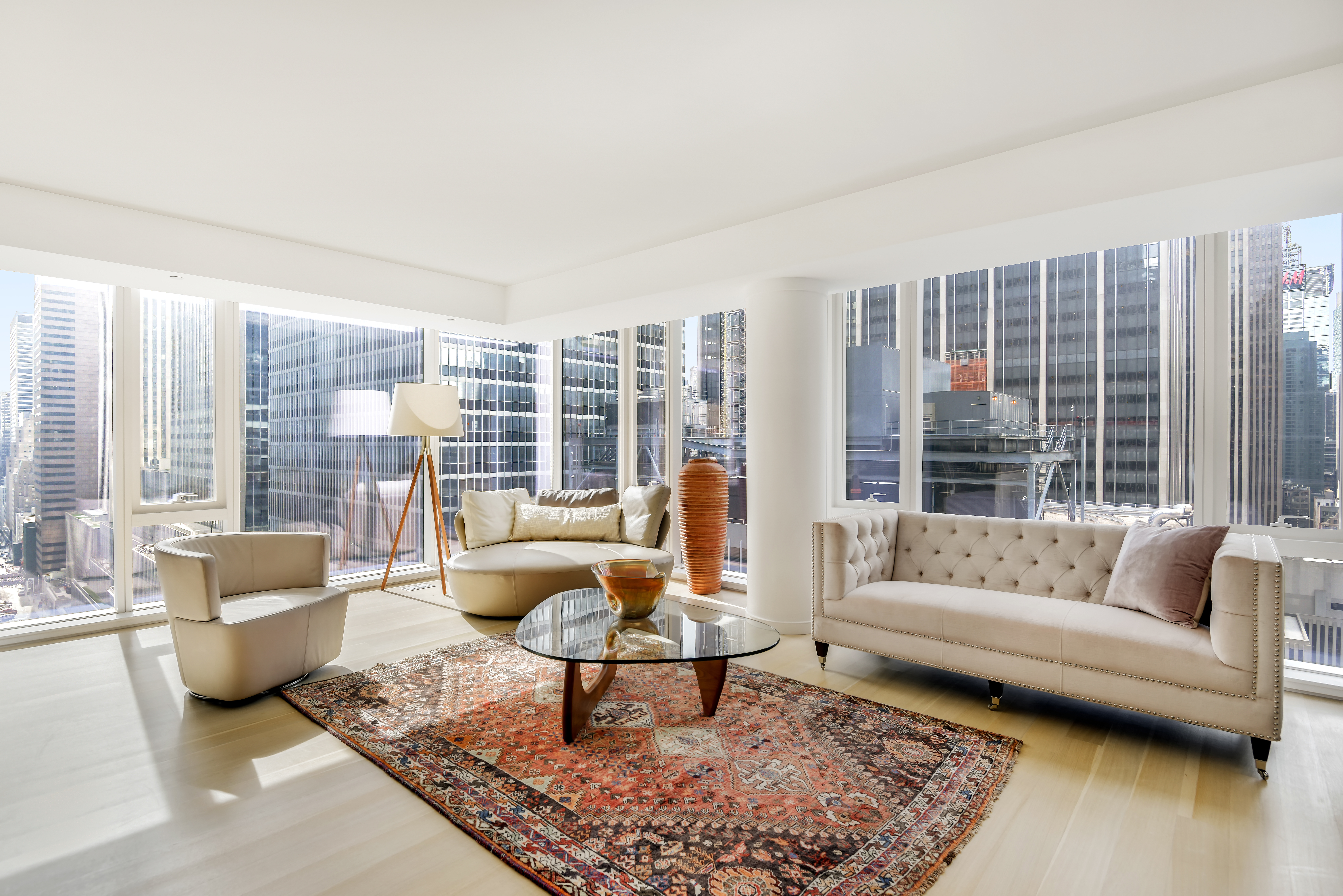
| | Happy Summer! After a hectic April and May, things have slowed down the last few weeks as our team has shifted gears from active clients and listings, to moving our deals through the contract process.
Of our 10 listings going into the Spring market, all but 3 have found buyers. While agents often highlight their listings that are gone almost as soon as they appear (and we had a few of those -- multiple offers on coops in Chelsea, Upper East Side, and Fort Greene), we were also very proud on finding buyers on our more challenging properties that had been on the market a while. While I'd love to tell you that this was all a product of our unmatched marketing skills, it is a testament to the growing strength of the Manhattan market. After a tough few years, Manhattan buyers finally seem to be back.
By contrast, while it has remained strong and continues to outpace Manhattan for the most in-demand areas, Brooklyn seemed to cool a bit. There is still substantial activity at open houses and major bidding wars on some properties, but for the first time in a while, we are seeing a great risk in overpricing in Brooklyn, even in the hottest neighborhoods.
Check out our market update for May below, and please don't hesitate to reach out with any real estate questions. |
| | |
|
|
|
| | Despite macroeconomic uncertainty and larger financial market fluctuations, the Manhattan market remained strong into May. Contract activity marketwide was up from last year (+3.4%) buoyed by significant gains in resale contracts (+7.5%), putting resale activity in line with historical norms. By contrast, new development lagged behind resales in terms of inventory, contracts, and closed sales. |
|
|
|
|
| 1,765 New Listings -14% M-o-M -0.5% Y-o-Y |
|
|
| | Signed Contracts -4.7% M-o-M +3.4% Y-o-Y |
|
|
|
|
| Median sale prices were up from the previous month and compared to last year for both resale and new development closings, although new development saw substantially fewer closings than this time last year (down more than 30%). On the ground we’ve also seen a notable lack of traffic from international investor buyers, which has disproportionately impacted new development. |
|
|
|
|
| | Median Sold PPSF +1.2% M-o-M +1.3% Y-o-Y |
|
|
| | Median Sale Price +4.6% M-o-M +4.5% Y-o-Y |
|
|
|
|
| Overall, Manhattan open house traffic in May was similar this time last year though lower than we saw in late Fall 2024, which is seasonally unexpected. Given the trend in May, we are expecting a fairly quiet summer, although we anticipate a healthy rebound in the Fall given the trasaction activity we've seen thus far in 2025. |
| | | Brooklyn activity markers were depressed across the board due to a notable lack of new development at all stages of the pipeline as well as an overall lack of inventory. Overall new listings dropped 2.6% year-over-year while new development inventory was down 36%. Contracts were down by 1.8% compared to last year, driven by a 9.3% decline in new development contracts. And closed sales were down 26%, driven by 35% fewer new development closings. |
|
|
|
|
| | New Listings -1.2% M-o-M -2.6% Y-o-Y |
|
|
| | Signed Contracts +2.9% M-o-M -1.8% Y-o-Y |
|
|
|
|
| Prices cooled slightly in May. While median sale price remained even with last year, price per square foot was down as expected from the decline in new development closings (which typically trade at premium compared to resale condos). |
|
|
|
|
| | Median Sold PPSF -0.7% M-o-M -12.6% Y-o-Y |
|
|
| | Median Sale Price -0.0% M-o-M +0.3% Y-o-Y |
|
|
|
|
| Brooklyn open house traffic in May was in line with what we saw at this time last year, although notably lower than we had been seeing earlier this year. Open houses had been averaging 3.5-6 visitors in January and February; that figure was down to just 2.5 visitors in May. Based on this trendline, we anticipate a quiet summer, but perhaps not in the most in-demand-areas which still had strong attendance figures, with May open houses in Park Slope and BoCoCa averaging 8 and 4.7 visitors, respectively. These and other in-demand neighborhoods should continue to outpace the laggards, and buoy marketwide statistics. |
|
|
|
|
| | | The Fed held rates steady at their last (May 7th) meeting, and the anticipated cuts this year are looking less likely as we enter into the summer with continuing macroeconomic uncertainty. |
|
|
|
|
| | RATE DATA BASED ON BASED ON CITIBANK'S 30-YEAR FIXED-RATE FOR NON-CONFORMING LOANS, COURTESY OF ZACK TOLMIE, SR. LOAN OFFICER. |
| | | Although legal challenges are still ongoing, New York City’s FARE Act took effect on June 11, ushering in a major change in how rental costs are handled across the city. The Fairness in Apartment Rental Expenses (FARE) Act prohibits brokers who represent landlords from charging broker fees to tenants. This includes brokers who publish listings with the landlord’s permission. Landlords or their agents must disclose all fees that the tenant must pay in their listings and rental agreements, and prior to lease signing. The FARE Act still permits tenants to pay brokers that they retain and allows landlords to pay a tenant’s broker. (REAL DEAL & NYC.GOV)
Tech hubs in Hudson Yards and Hudson Square are also fueling interest in trophy properties in Downtown Manhattan, especially in Tribeca, SoHo, and the West Village. Ultra-wealthy buyers are drawn to large layouts, high-end finishes, and boutique buildings offering privacy and prestige in a prime location. (WSJ)
NYC just added 1,320 new rental units in the Financial District with the conversion of 25 Water Street into SoMA — now the largest office-to-residential project in U.S. history. With office vacancies still high and housing demand on the rise, adaptive reuse is emerging as a smart, scalable solution. As mortgage rates remain elevated and rental competition heats up, projects like SoMA are delivering much-needed inventory to meet the growing demand. (NY TIMES)
New York City implemented a congestion pricing zone in early 2025, applying fees to vehicles entering Manhattan below 60th Street during peak hours. Early data shows a 7.5% decrease in traffic, shorter commute times, and increased public transit use. The program generated $160 million in its first quarter to support transit infrastructure. As vehicle traffic approaches pre-pandemic levels and subway ridership remains 30% lower, the policy is beginning to affect travel patterns and residential decisions. (NY TIMES) |
| | | These homes are just moments away from lush parks—perfect spots for summer picnics, playtime for all ages, and afternoons soaking up the sun with friends and family. |
| | |
|
|
|
| | | | Hear it from our clients! |
| "Isil is, quite simply, a superb real estate agent. I was one of those people who wondered at the need for an agent; Isil proved herself invaluable throughout our process. She was an excellent advocate and counselor -- she was part of our team. Isil was able to negotiate on our behalf in a strong, yet productive, manner that consistently kept things moving forward -- especially when our transaction seemed at risk of stalling. Housing is, for nearly everyone, the largest and most significant financial decision that they will make in their lives; we should all want the smartest, most ethical, and effective professional to help with that decision. Isil is that agent and we cannot recommend her highly enough."
– Buyer of a West Village Condo |
|
|
|
|
| | Office: 646-982-0353 Compass is a licensed real estate broker. All material is intended for informational purposes only and is compiled from sources deemed reliable but is subject to errors, omissions, changes in price, condition, sale, or withdrawal without notice. No statement is made as to the accuracy of any description or measurements (including square footage). This is not intended to solicit property already listed. No financial or legal advice provided. Equal Housing Opportunity. All Coming Soon listings in NYC are simultaneously syndicated to the REBNY RLS. Photos may be virtually staged or digitally enhanced and may not reflect actual property conditions. |
|
|
|
|
|
|